
Avon Neighbors Block Record Coverage
County offices describe parcels, recorded documents, or a single named voter. None of them publishes a live verified-neighbor tool. Start with the Lorain County Auditor. Its real-estate search takes an address, owner, or parcel number and returns the key property fields. The county GIS and Tax Map gateway adds spatial context. The Recorder then follows a confirmed party, parcel, or legal-description lead. For an Avon block, work one parcel at a time. State plainly what each record can support.
| Source | What It Shows About a Block | Access |
|---|---|---|
| Auditor roll | A separate PPN, Location, and Owner association for each parcel | Public Auditor search; owner is not every occupant |
| Auditor GIS / Tax Map | Official parcel geography, roads, boundaries, and map context | GIS/Tax Map gateway; live neighbor or buffer controls were not verified |
| Recorder property search | Recorded land documents after a party, PPN, or legal-description bridge | Account access; name, parcel, or date paths, not a street browser |
| Voter tools | Individual registration-status research or a dated county file | Not an address-wide or block roster; protected data remains excluded |
| Planning and historical sources | Subdivision, street-development, and earlier community context | Context only, not a current-neighbor list |
Three fields in a parcel record answer three different questions. The location line identifies the taxable parcel itself. An owner name ties someone to the property roll. The mailing line may sit far from the block. None proves who actually occupies the house, and adjacent parcels alone say nothing about relationships between households.
Note: Keep each parcel result separate, because a shared road or boundary does not create a verified household connection.
Avon Neighbor Parcels Need Context
A PPN, or property number, is the durable identifier threading the Auditor, Tax Map, Recorder, and older land records together. The Auditor's public search screen labels itself “Search by Parcel, Owner or Address.” Verified result fields include Property Number, Owner, Location, Land Use, and Acres. Record them exactly as written. “Location” is the situs, the physical parcel itself. Do not confuse it with an owner's mailing address. Do not treat it as proof of who currently lives there.
Avon has no verified public inventory of HOAs, neighborhood associations, block watches, or member directories. A city planning map can explain how a subdivision grew. A set of meeting minutes can too. But neither is a roster. The same caution applies to Avon CityView: the portal handles account-based document uploads to an existing permit. It is not a historic public neighbor search. For a specific permit or zoning record, a targeted existing-record request is the supported city route.
Note: Define the block by parcel geography, never by a guessed radius or an unverified online circle drawn around an address.
Map Avon Parcels by PPN
The safe workflow moves from a focal address to individual, documented parcel records. The GIS gateway is helpful for orientation. However, it publishes no adjacent-owner, neighbor, or buffer feature. Do not assume one exists. The Tax Map office can work from a PPN, road, subdivision, owner, or map reference. Staff can also provide help or a printed map when visual context matters. The Lorain County GIS/Tax Map gateway is the verified block-map entry point.
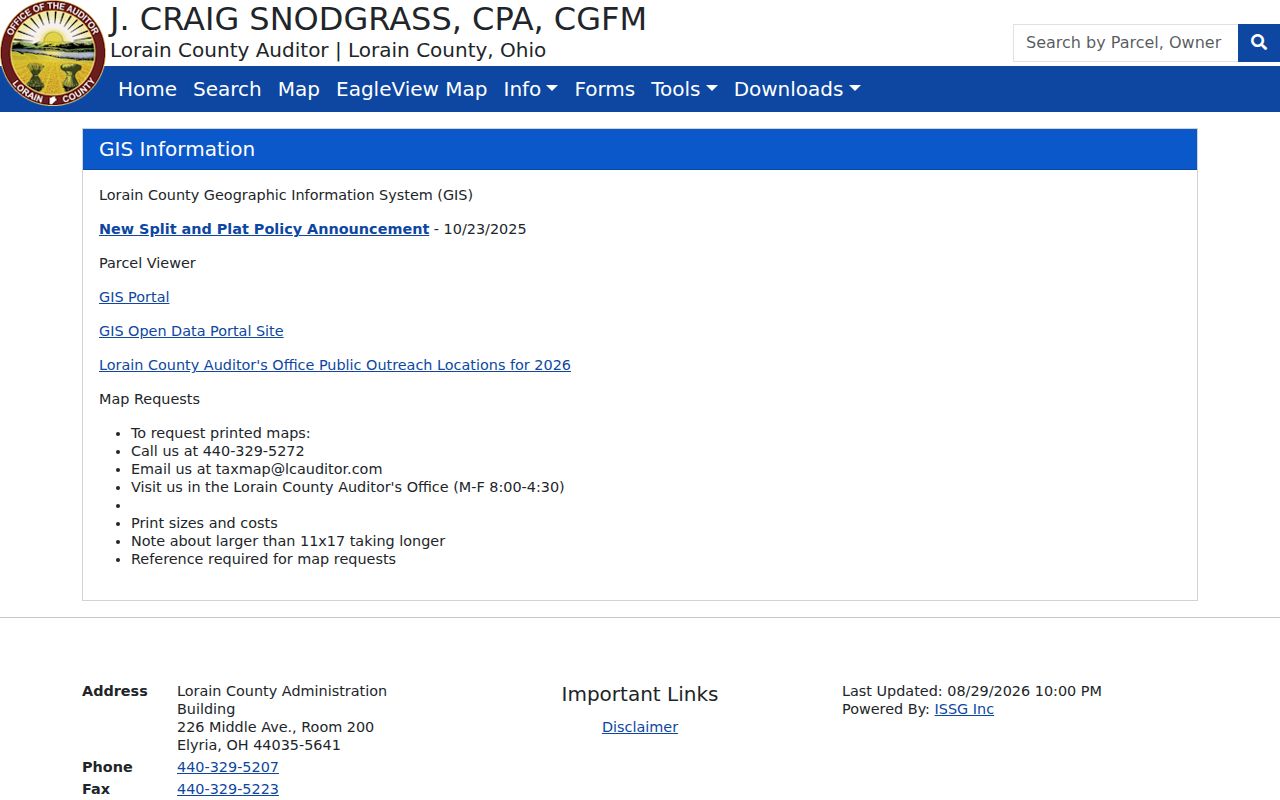
Use the gateway for parcel context only. Then verify each nearby property in a separate Auditor record instead of treating the map as a household list.
- Enter the focal address in the Auditor search and keep the returned PPN, Location, and Owner display. This identifies the parcel at the center of the Avon question.
- Use the Lorain County GIS/Tax Map gateway for verified parcel context. If the online map does not resolve the setting, ask Tax Map for help using the PPN, road, subdivision, owner, or map reference.
- Identify visually adjacent parcels, then look up each adjacent PPN separately in the Auditor search. Record each result as its own parcel association rather than creating a combined neighbor list.
- Only after an owner, PPN, or legal description bridges the records, use the Recorder to inspect a recorded instrument. A deed documents a land transaction, not a household.
The chain is simple. Focal address, then Auditor PPN, then GIS or Tax Map context, then separate adjacent PPN searches, and the Recorder only after the records bridge. For a full named-street chain rather than one block, use the Avon street directory approach.
Avon Neighbor History Sources
Historical societies and community collections can enrich a documented trail. Family papers, maps, newspapers, cemetery files, and oral-history recordings all add color. They cannot produce a present-neighbor list. That distinction matters in Avon, where older rural and township records sit beside later subdivision parcels. Use a collection to test a historical question. Then return to the official custodian when a record needs verification.
| Resource | Documented context and access |
|---|---|
| Lorain Public Library System | Special Collection directories, newspapers, maps, genealogy sources, and local-history research. |
| Lorain County Historical Society | Appointment-based research library at the History Center in Elyria. |
| Lorain County Chapter OGS | Cemetery transcriptions, newspapers, yearbooks, church, township, and directory resources. |
| Avon Historical Society | Historical sketch, oral-history project, family genealogies, school and bicentennial material. |
The Lorain County Memory collection is a documented collaboration between LPLS and the Lorain Historical Society, offering digitized photographs, documents, newspaper articles, artifacts, and audiovisual material. These items can illuminate a place or an older family trail. Still, they are voluntary, collection-specific evidence rather than proof of any present household.
Note: Historical community material can support place research, but corroborate it before treating it as an identity fact.
Avon Neighbor Voter Limits
Want a block-by-block voter list for Avon? That tool does not exist. The Lorain Voter Information Search works one name at a time. Its opening screen asks for a last name and first name. There is no address, date of birth, or ID field to search by. So it answers narrow, person-specific election-record questions. A match says nothing about every resident near a parcel.
Participants in Safe at Home stay out of public versions entirely under ORC 111.44. For a specific record or a pointed question, the Board of Elections records-request channel fits the purpose. Asking it to assemble a custom block directory of Avon neighbors is a different job. These voter rolls do not support that.
Avon Neighbor Sources Compared
How do you compare ways to find neighbors in Avon? Start with the official side. County parcel rolls, the recorder's indexes, and assessor maps show their limits openly, so a claim about who owns a lot can be traced to a parcel, a map, or a recorded deed. Commercial people-search sites work differently. They pull a residents directory from many sources at once, but stale addresses and merged names slip in, and nothing there proves who actually occupies a house. For one block, the county route wins on transparency. Every fact ties back to a public record you can pull yourself.
| Official parcel and records route | Commercial neighbor-lookup category |
|---|---|
| Separates parcel, owner, location, and recording evidence by custodian | May combine records with different dates and identity rules |
| Lets a researcher preserve a PPN, case number, or legal description | May not show the original record identifier or update date |
| Requires a separate result for each adjacent parcel | Can suggest a broad group without proving a household |
| Provides office contacts for correction or a specific record request | May retain an old result until its own suppression process is used |
When official results conflict, go back to the source. Recheck the Auditor, the Tax Map office, or the Recorder. Or go to whichever court holds the file rather than guessing. A mismatch never justifies inferring a relationship, a protected address, or a current occupant.
Note: Keep the PPN or other original identifier handy. Any conflicting result can then be rechecked against the official record.
Avon Blocks Span Different Eras
Avon blocks carry different layers of history. The city began as a farming community, and its records still reflect that past. French Creek and Detroit Road form a historic spine in city materials, while newer subdivision parcels cluster along the major routes built later. A block question can therefore split in two. The parcel map handles modern context. The library, the historical society, or the Records Retention Center holds the earlier trail.
The time depth here is real. County records reach back to 1824. The Records Retention Center keeps Auditor Tax Duplicate microfilm from that same year, and staff ask visitors to arrive with the place, the address, a parcel number, and an early owner name. Older documents may say Troy Township or another prior local name, so treat those labels as keys for research. They unlock historic places, not proof of who lives on an Avon block now.
Avon Neighbor Lookup Privacy Limits
Parcel records will not name everyone at an address. The Auditor and Recorder supply no data on children. They also supply none on unlisted household members, utility accounts, deliveries, or private motor-vehicle records. A name on a tax bill might be a trustee. It might be an absentee owner, or simply the person who gets the mail. Some court materials stay sealed or protected too. If the official record does not settle a fact, let the question stay open.
Respect the guardrails that exist. Safe at Home protections, redaction requests from public-service workers, and record-specific confidentiality rules all apply. No residents directory or lookup should be used to work around a protected address. Errors go to the office that keeps the record. That means the Auditor for property data, the Recorder for a document or index problem, the Board of Elections for registration, and the court for its own files.
Lawful use. Use Avon neighbor records for personal, civic, family-history, or local-place research. Never use a parcel or records trail to stalk, harass, intimidate, or harm another person.